Low Water Pressure in Utah Homes: Causes & Fixes
Water pressure dropped or always been low? Here's the diagnostic order for Utah homes — from PRV to galvanized pipes to municipal-side issues.
Low water pressure is either a fixture problem (one tap), a house problem (everything in the home), or a service problem (city/well side). The location of the issue tells you which to fix.
Diagnostic
Most likely causes (in order)
Walk through the list top-to-bottom. The first cause matches roughly half of cases we see in Utah; if it doesn't fit your symptoms, move to the next.
Aerator clogged with scale (Utah hard water)
Calcium and sediment build up in the screen at the end of the faucet. Single-fixture issue. Easiest plumbing fix in the world.
Pressure-Reducing Valve (PRV) failure
PRV at your water main regulates incoming pressure (city often delivers 80–120 PSI; PRV reduces to 60–70 PSI for the home). When the PRV fails, pressure drops below 40 PSI throughout the house.
Galvanized pipe corrosion
Pre-1965 Utah homes have galvanized steel water lines. Internal corrosion narrows the bore over decades. Hot water side fails first (scale + heat). Whole-house pressure declines slowly.
Closed/partially-closed shutoff valves
Main shutoff at the meter or at the fixture is partly closed. Easy to miss after plumbing work.
Water main break or city work
Pressure drop affecting your whole street/neighborhood = city issue. Check city's water-status page or call utilities.
DIY first
Safe checks you can do today
Each step is labeled by safety level. Stop at any “Pro only” step — that's where the diagnostic crosses into work that needs gauges, multimeters, or live electrical access.
Identify scope: one fixture or whole house?
Safe DIYTest cold + hot at multiple faucets. One fixture = aerator. All fixtures = PRV / pipe / service issue.
Unscrew the aerator
Safe DIYPliers (with a rag to protect chrome) → counter-clockwise. Run water without it. Pressure restored = clean the screen + reinstall.
Test pressure at outdoor hose bib
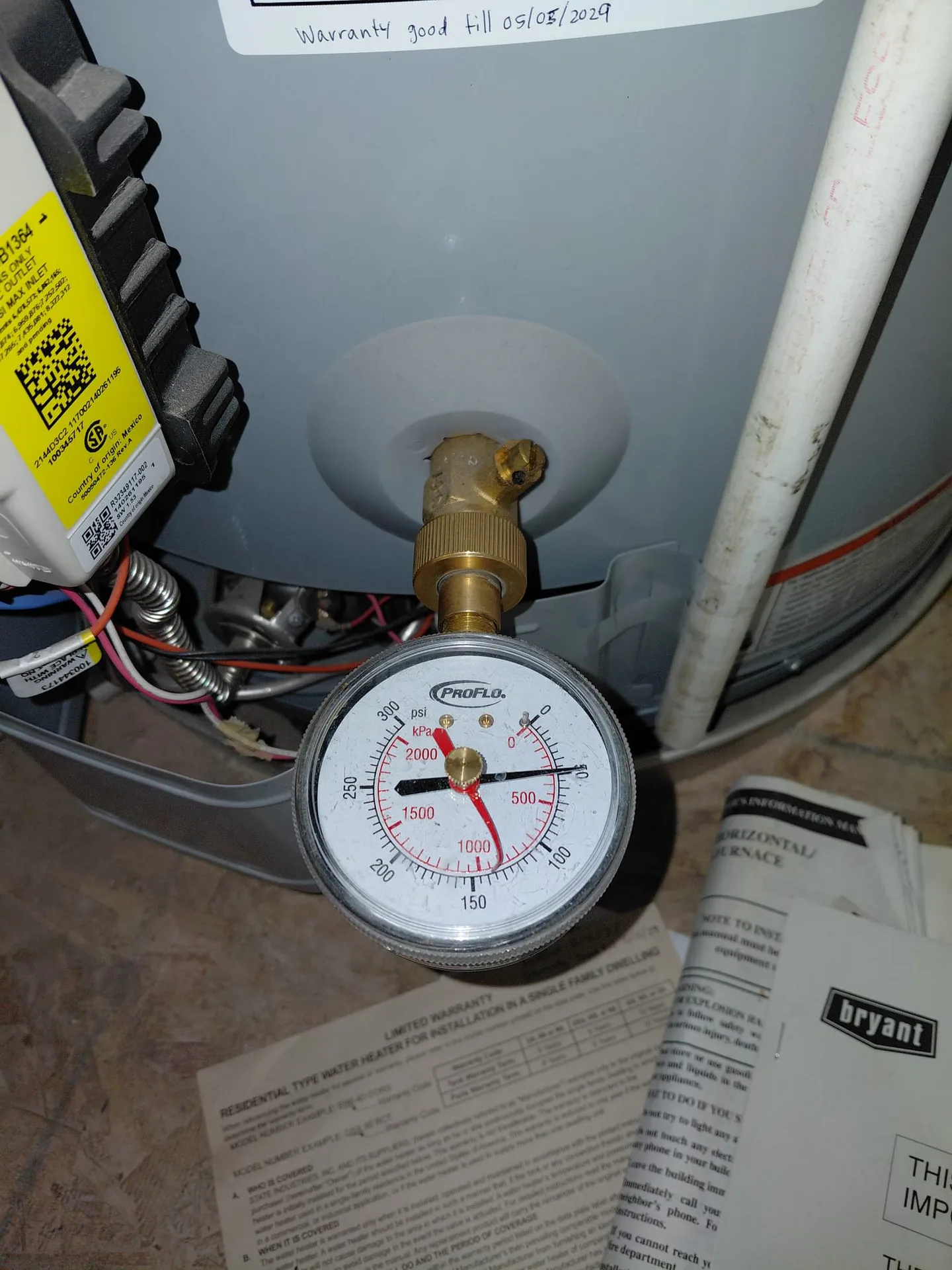
Safe DIY$15 test gauge from any home center. Screws onto a hose bib. Should read 50–70 PSI. <40 PSI = service-side or PRV issue. >85 PSI = PRV stuck open (will damage fixtures and water heater).
Check the main shutoff valve at the meter
CautionShould be parallel to the pipe (open). Any closed or partially-closed shutoff drops pressure downstream.
Stop and call
When you should call us instead
- Whole-house pressure under 40 PSI — PRV or service issue
- Hot water pressure much lower than cold — galvanized pipe corrosion or scale-clogged tank
- Pressure 85+ PSI at the gauge — high pressure damages fixtures, requires PRV
- Sudden drop with no plumbing work done — possible water-main leak under the house
Not sure if it's a real problem?
Our AI walks you through the same triage a senior tech would — figures out whether you need a service call or whether it's something simpler you can handle yourself. Or skip ahead and book a diagnostic visit.
FAQ
Frequently asked questions
How much does PRV replacement cost in Utah?
+
Typical PRV replacement: $400–$700 installed. Labor: 1–2 hours. We pressure-test before and after to confirm the fix. Often combined with expansion tank replacement (~$150 add-on) on water heater installs.
Related
More diagnostic guides
Other common Utah-home symptoms with the same step-by-step diagnostic format.