Frozen AC Coil: What It Means and How to Fix It
Found ice on your AC? Here's what's actually happening, why it always means something is wrong, and the safe DIY thaw procedure before you call.
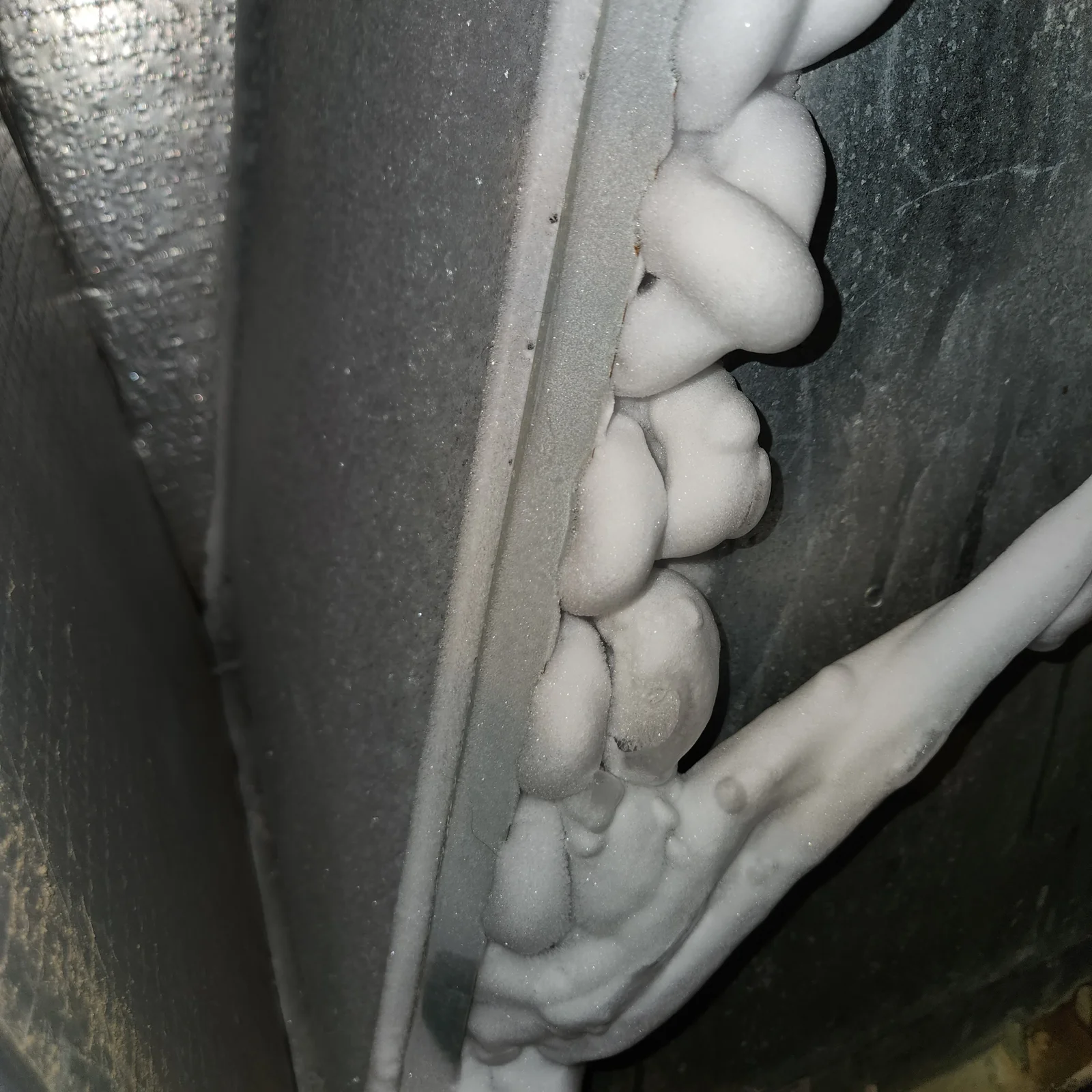
Ice on an AC coil is never normal. It means warm air isn't crossing the coil fast enough OR the refrigerant pressure is too low — either way, the coil drops below freezing, condensate freezes, and now you have a block of ice instead of a heat exchanger. Running the unit while frozen damages the compressor. Here's the safe diagnostic + thaw.
Diagnostic
Most likely causes (in order)
Walk through the list top-to-bottom. The first cause matches roughly half of cases we see in Utah; if it doesn't fit your symptoms, move to the next.
Severely clogged air filter
The most common cause. A loaded filter starves the coil of airflow; coil temp drops below 32°F; condensate freezes; ice grows; airflow stops entirely.
Closed or blocked supply registers
Closing too many registers (people often try to redirect cooling to one room) raises static pressure on the air handler. The blower can't move enough air across the coil. Same result as a clogged filter.
Low refrigerant
Refrigerant pressure that's too low drops the coil saturation temperature below 32°F even with normal airflow. Ice forms at the inlet U-bend first. This is a leak — refrigerant doesn't get used up.
Failing blower motor or capacitor
Indoor blower running slow or intermittently produces the same effect as low airflow. Listen for unusual humming or short-cycling at startup.
DIY first
Safe checks you can do today
Each step is labeled by safety level. Stop at any “Pro only” step — that's where the diagnostic crosses into work that needs gauges, multimeters, or live electrical access.
Turn the AC OFF at the thermostat
Safe DIYSet mode to OFF. Don't just raise the temperature — running the unit while frozen damages the compressor.
Set the fan to ON to accelerate thaw
Safe DIYMode = OFF, Fan = ON. Air handler runs without compressor. Pulls room air across the frozen coil to thaw it. Takes 2–6 hours depending on ice thickness.
Replace the air filter
Safe DIYStandard 1-inch filter every 1–3 months in Utah; 4-inch media every 6–12 months. While the coil thaws is the perfect time.
Open all supply registers
Safe DIYDon't close supplies in unused rooms — it raises static pressure and re-freezes the coil. If a room is too cold, it's a balancing/duct sizing issue, not a register issue.
Place towels around the air handler
Safe DIYSeveral gallons of water will drain from the thawing coil. Most modern systems have a condensate pan and float switch, but old units or clogged drain lines back up onto the floor.
If it freezes again within 24 hours, stop
Pro onlyRe-freezing after a filter change means refrigerant or blower problem. Call us — both require diagnostic gauges.
Stop and call
When you should call us instead
- Coil refuses to thaw within 6–8 hours of running fan-only
- Re-freezes within 24 hours of clearing
- You see oil residue or hear hissing near the lineset — refrigerant leak
- Water damage to ceiling or floor from condensate overflow
Not sure if it's a real problem?
Our AI walks you through the same triage a senior tech would — figures out whether you need a service call or whether it's something simpler you can handle yourself. Or skip ahead and book a diagnostic visit.
FAQ
Frequently asked questions
Can I just chip the ice off?
+
Don't. Aluminum fins bend instantly — you'll permanently restrict airflow and cause it to re-freeze even after the underlying cause is fixed. Patient fan-only thawing is the only safe method.
How long does the AC need to be off after a freeze?
+
Until the coil is fully thawed AND the condensate pan is dry. Typically 4–6 hours of fan-only running. Then we recommend a 30-minute warm-up before resuming cooling so any moisture in the coil drains.
Related
More diagnostic guides
Other common Utah-home symptoms with the same step-by-step diagnostic format.