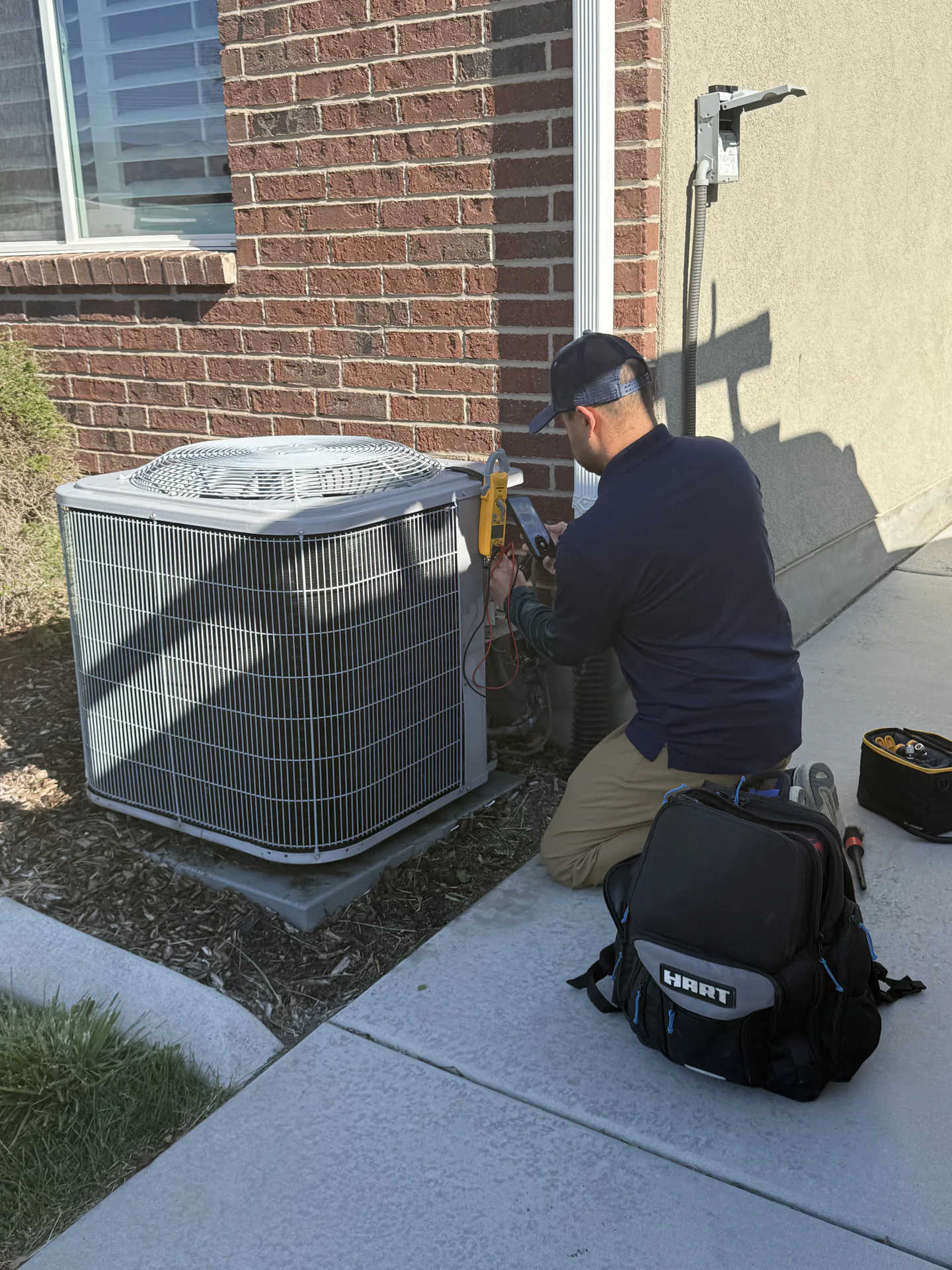
AC Not Cooling at All? Utah Diagnostic Guide
AC running but barely cooling, or not cooling at all? Here's how to tell whether it's a thermostat issue, a frozen coil, low refrigerant, or a failed compressor.
AC running but the house won't cool below 78°F on a 90°F day usually means one of four things: airflow is restricted, refrigerant is low, the system is undersized for the load, or the compressor is failing. Walk through the diagnostic in order — most homeowners can identify the cause in 15 minutes.
Diagnostic
Most likely causes (in order)
Walk through the list top-to-bottom. The first cause matches roughly half of cases we see in Utah; if it doesn't fit your symptoms, move to the next.
Restricted airflow (filter, coil, or blower)
A 50%+ blocked filter or blanketed condenser coil cuts cooling capacity by 25–35%. The system is doing its best with reduced airflow.
Low refrigerant from a leak
20% low on refrigerant = roughly 35% loss of cooling capacity. Symptoms: cold suction line at outdoor unit, possibly ice on it.
Oversized or short-cycling AC
An oversized AC cools the air near the thermostat fast, hits setpoint in 4–6 minutes, and shuts off. Bedrooms at the end of duct runs never get cooled. Feels like 'AC not cooling' even though the unit is running.
Failing compressor
Compressor that's pulling normal amps but not pumping refrigerant pressure correctly. System runs, blower runs, outdoor fan runs, but lineset isn't actually cold.
DIY first
Safe checks you can do today
Each step is labeled by safety level. Stop at any “Pro only” step — that's where the diagnostic crosses into work that needs gauges, multimeters, or live electrical access.
Replace the filter and clean the condenser
Safe DIYSingle biggest no-cost fix. New 1-inch filter or rinsed coil restores 25%+ capacity in a few minutes.
Walk room-to-room with a thermometer
Safe DIYIf most rooms are at 72°F and one or two are at 78°F+, it's a duct or oversize problem, not a system failure. Call us and we'll check static pressure + Manual J.
Feel the lineset at the outdoor unit
CautionThe larger insulated copper line should be COLD (40–50°F to the touch) when AC is running. If it's room temperature, the unit isn't actually cooling — refrigerant or compressor problem. Stop and call.
Stop and call
When you should call us instead
- Lineset is room temperature when AC is running — no cooling happening
- Indoor temp climbs more than 4°F in an hour with AC running
- Compressor sounds different than usual (groaning, rattling, repeated short cycling)
- Energy bill is up 15%+ with no usage change — efficiency loss confirmed
Not sure if it's a real problem?
Our AI walks you through the same triage a senior tech would — figures out whether you need a service call or whether it's something simpler you can handle yourself. Or skip ahead and book a diagnostic visit.
FAQ
Frequently asked questions
How long should it take my AC to cool the house?
+
A properly-sized AC should drop indoor temp by ~1°F per 30–45 minutes on a 90°F day. Faster than that and it's likely oversized; slower and it may be undersized or have airflow/refrigerant issues. Time it on a hot day for a baseline.
Should I run the fan continuously or on auto?
+
Auto saves energy and lets the coil dry between cycles (less mold risk). Fan-on improves whole-house mixing — useful in homes with one thermostat and uneven temps, but uses 250W extra. We default to AUTO for most installs.
Related
More diagnostic guides
Other common Utah-home symptoms with the same step-by-step diagnostic format.
Why Is My AC Blowing Warm Air? (Utah Diagnostic Guide)
AC running but not cool — top causes, fast checks, and when to call.
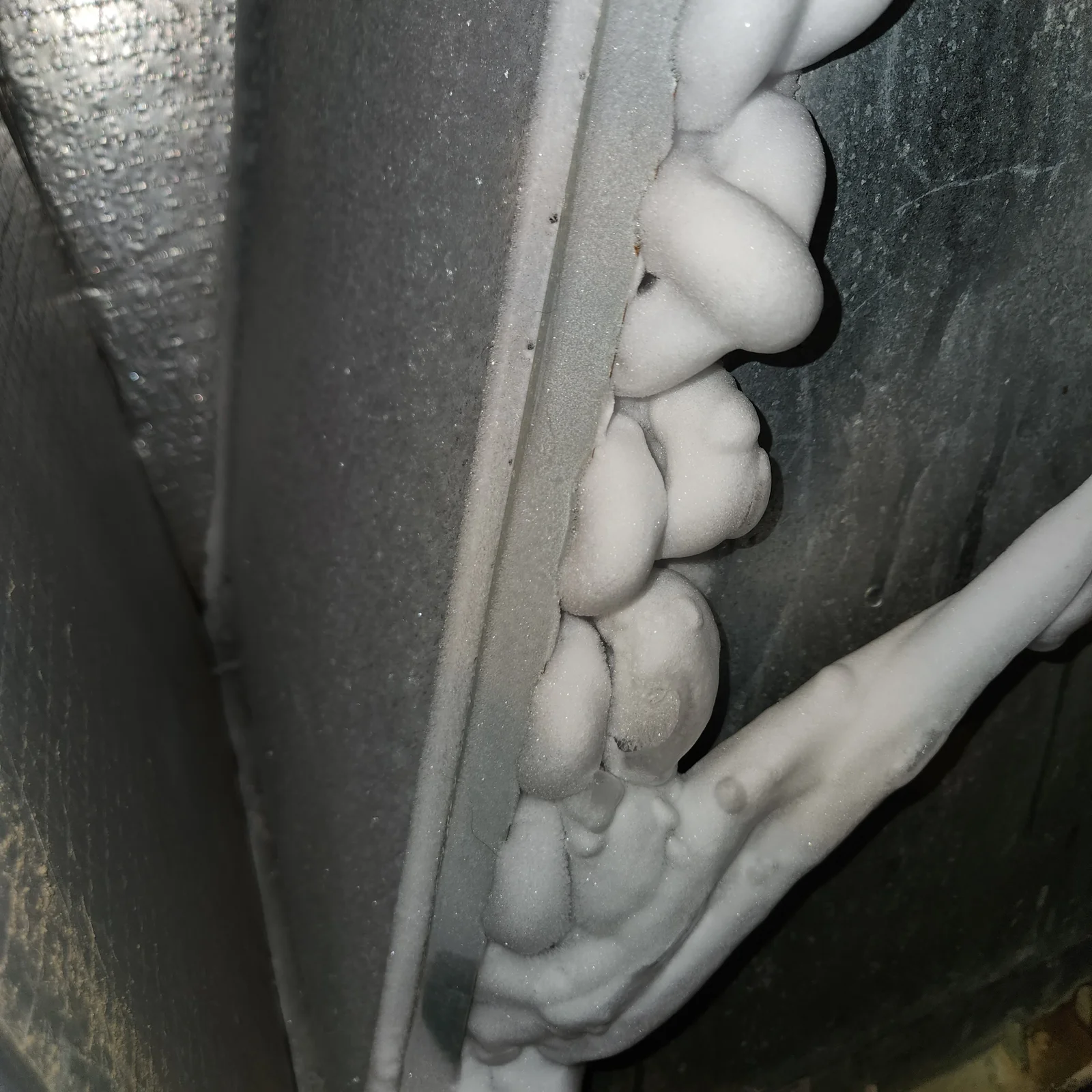
Frozen AC Coil: What It Means and How to Fix It
Ice on the AC = airflow or refrigerant problem. Here's the fix.
Why Are My Utah Energy Bills So High? HVAC Diagnostic
Bill up $40–$100/mo with no usage change? Top HVAC + plumbing + electrical causes.